Eucalyptus
Botanical name: Eucalyptus
Common name: Eucalyptus
Part used: Twigs and leaves
Properties of eucalyptus
Respiratory support: Eucalyptus acts as both an expectorant and an antitussive, meaning it helps loosen mucus so it can be cleared from the chest while also calming the urge to cough. It’s thought to do this by acting on receptors in the lungs and airways, making it a helpful ally for coughs that come with colds and seasonal bugs.
Nasal decongestant: That fresh, clearing sensation you feel when breathing in eucalyptus comes from its ability to stimulate the cold receptors in the nose. This creates a feeling of cooler, easier airflow, helping a blocked or stuffy nose feel more open.
Antimicrobial: Eucalyptus has natural antimicrobial properties, which is why it’s traditionally used to support the body against unwanted microbes, including in the care of cold sores.
Anti-inflammatory: Research suggests eucalyptus may help reduce markers of inflammation in the body, supporting comfort in irritated airways and tissues.
Pain relief: Eucalyptus contains natural compounds called monoterpenes, which are thought to contribute to its mild analgesic, or pain-relieving, effects. This is one reason eucalyptus is a familiar ingredient in rubs and balms for sore muscles and aches.
Found in
-
Dual-Action Chest & Lung Support
Regular price $59.80 NZDRegular priceUnit price / perSale price $59.80 NZD -
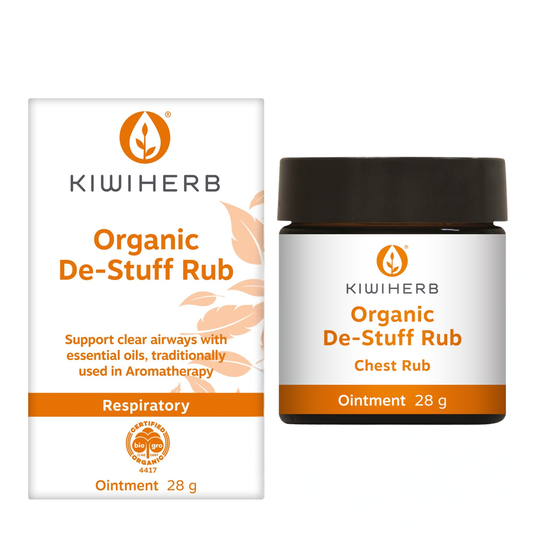
Organic De-Stuff Rub
Regular price $32.45 NZDRegular priceUnit price / per$32.45 NZDSale price $32.45 NZD -
Skin Clear Gel
Regular price $20.00 NZDRegular priceUnit price / perSale price $20.00 NZD
Frequently asked questions
What is eucalyptus good for?
Eucalyptus (Eucalyptus globulus) is a native Australian herb traditionally used to support the respiratory system, particularly for coughs, colds, chest congestion and blocked noses. Its leaves and oil contain a compound called 1,8-cineole (also known as eucalyptol), which gives eucalyptus its fresh, clearing aroma and much of its traditional benefit. It’s also used in rubs and balms to ease sore muscles and aches.
Is eucalyptus good for a blocked nose?
Yes, eucalyptus is one of the most popular natural remedies for a blocked or stuffy nose. When inhaled, it stimulates the cold receptors in the nose, creating a cooling sensation that makes breathing feel easier and airflow feel more open. It’s also traditionally used to help loosen mucus in the sinuses and chest, which is why it’s a common ingredient in chest rubs, steam inhalations and cough remedies.
How do you use eucalyptus for congestion?
There are several ways to use eucalyptus for congestion:
- Steam inhalation: add a few drops of eucalyptus oil to a bowl of hot (not boiling) water, cover your head with a towel and breathe in gently for a few minutes
- Chest rub: apply a eucalyptus balm or rub to the chest and throat
- Diffuser or shower: add a few drops to a diffuser, or to the floor of a hot shower
- Herbal syrups and extracts: formulated products containing eucalyptus are designed to be taken as directed for coughs
Is eucalyptus oil safe to swallow?
No. Pure eucalyptus oil should never be swallowed, as even small amounts can be toxic and cause serious symptoms such as drowsiness, vomiting and breathing difficulties. Children are especially at risk, so always store eucalyptus oil out of reach. Eucalyptus is safe to take internally only in products specifically formulated for oral use, such as herbal cough syrups, where it’s included at carefully controlled levels. If eucalyptus oil is swallowed, contact the National Poisons Centre on 0800 764 766 straight away.
Is eucalyptus safe for babies and children?
Eucalyptus oil should not be applied to the face, nose or chest of babies and young children, as it can trigger breathing difficulties in little ones. For children, choose products specifically formulated for their age and follow the label guidance carefully. Eucalyptus is also best avoided during pregnancy and breastfeeding unless advised by your healthcare professional, and it can be toxic to pets, particularly cats, so take care when using diffusers at home. If symptoms persist, see your healthcare professional.