Ginkgo
Ginkgo biloba (ginkgo) leaf is a well-known plant remedy to help support cognitive function and to help maintain healthy blood circulation. Research supports beneficial effects on memory and concentration with sustained use. Its benefits stem from key constituents, which include flavonoids and terpenoids such as ginkgolides and bilobalide.
Botanical name: Ginkgo biloba
Common name: Ginkgo
Part used: Leaf
While the tree originates from China, New Zealand has an exceptional, high-quality ginkgo growing industry, with leaves from locally grown trees highly regarded throughout the world for their high levels of these active constituents.
Ginkgo is also an antioxidant, supporting the body to resist oxidative stress which may contribute to the effects of aging. In the traditional sense, it also has useful tonic actions on other organs whose function may decline with aging.
It can help with cognition in support of the treatment of ADHD.
Found in
-
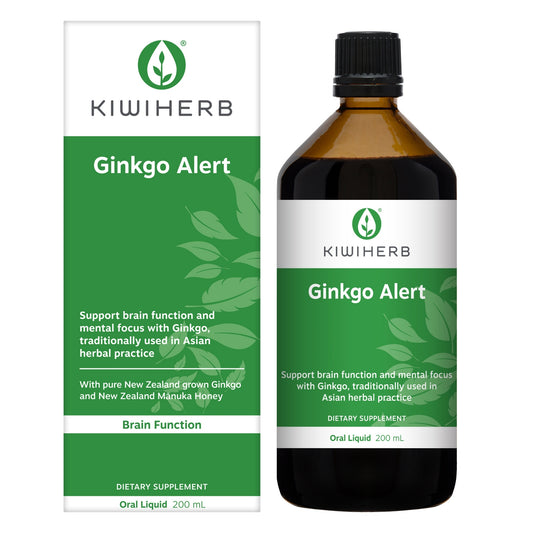
SaleGinkgo Alert
Regular price $44.85 NZDRegular priceUnit price / per$59.80 NZDSale price $44.85 NZDSale
Frequently asked questions
What is ginkgo good for?
Ginkgo (Ginkgo biloba) is a herb made from the fan-shaped leaves of the ginkgo tree, traditionally used to support memory, concentration and healthy circulation. It’s one of the most widely used herbs in the world, particularly for supporting brain health as we age. Ginkgo’s benefits come from natural compounds called flavonoids and terpene lactones, which have antioxidant properties and support healthy blood flow.
Does ginkgo help with memory and concentration?
Ginkgo is traditionally used to support memory, focus and mental clarity, especially in older adults. It’s thought to work by supporting healthy blood flow to the brain and protecting brain cells from oxidative stress. Research on ginkgo for memory has shown mixed results, with some studies suggesting benefits for cognitive function in older people. Ginkgo is a slow-acting herb, so it’s usually taken daily for at least four to six weeks before its effects are assessed. Always follow the dosage directions on the label.
Can ginkgo help with circulation?
Yes, supporting healthy circulation is one of ginkgo’s main traditional uses. It’s thought to help keep blood vessels flexible and support blood flow to the extremities, which is why it’s often used by people who experience cold hands and feet. Ginkgo has also been studied for leg pain when walking caused by poor circulation. Because ginkgo affects blood flow, it’s important to check with your healthcare professional before use if you take any medication.
Why is ginkgo called a living fossil?
Ginkgo is one of the oldest tree species on Earth, with fossils dating back more than 200 million years, to the time of the dinosaurs. It’s the only surviving member of its plant family, which is why it’s often called a living fossil. Ginkgo trees are also famously hardy: several trees near the centre of the Hiroshima atomic blast in 1945 survived and are still growing today.
Are there any side effects of ginkgo?
Ginkgo leaf extract is generally well tolerated when taken as directed, though some people may experience mild headaches, dizziness or stomach upset. Because ginkgo may affect blood clotting, check with your healthcare professional before use if you take blood-thinning medication, aspirin or anti-inflammatories, have a bleeding disorder, or are scheduled for surgery or dental work. Ginkgo is not recommended during pregnancy or breastfeeding, or for people with epilepsy, and you should check with your healthcare professional before use if you take any prescription medication. Never eat raw ginkgo seeds, as they can be toxic.