- Home
- Herb Profiles
- Globe Artichoke
Globe Artichoke
This liver loving plant is stepped in ancient mythology. Globe Artichoke is connected to the story of Cynara, a beautiful mortal woman whom Zeus fell in love with while visiting the island of Kinaros. Zeus brought Cynara to Mount Olympus and offered her immortality. She accepted his proposal but soon became homesick and returned to the land of mortals. Angered by her rejection, Zeus transformed her into the artichoke plant. The plants tough, spiny exterior was said to reflect Zeus’s wrath, while its tender heart symbolised Cynara’s inner beauty. This myth helped frame Globe Artichoke as a plant associated with both desire and punishment, blending themes of love, power and transformation common in Greek mythology.
While the immature flower is eaten as a vegetable, it is the leaf that is used medicinally. The medicinal properties of Globe Artichoke have been known for many years. The leaves were very popular between the 16th and 19th centuries when they were used to stimulate bile flow and for a variety of digestive disorders.
The ability of Globe Artichoke extracts to stimulate bile production and bile flow is well supported by pharmacological studies & clinical trials. Several studies also support the liver-protective properties of Globe Artichoke, an action that is likely to be related to its antioxidant properties. Significant liver restorative properties have also been demonstrated.
Because of its ability to improve the function of the liver and therefore aid digestion, Globe Artichoke leaf extracts are currently popular in some European countries for the treatment of dyspepsia (indigestion). Several studies have supported the effectiveness of this herb in relieving symptoms such as nausea, cramping, abdominal pain, flatulence and fat intolerance.

Botanical name: Cynara scolymus
Common name: Globe Artichoke, French Artichoke, Cynara
Part used: Leaf
Frequently Asked Questions
What is Globe Artichoke good for?
Globe Artichoke is valued as a nutrient-dense food and medicinal plant. Nutritionally, it provides dietary fibre, potassium, folate, vitamin C and a range of polyphenols with antioxidant activity. Medicinally, Globe Artichoke has a long history of use in European herbal traditions, particularly for digestive and liver support.
Its primary health applications include:
- Supporting digestion, particularly of fats
- Promoting bile production and flow
- Supporting liver function
- Helping manage cholesterol levels
- Reducing symptoms of indigestion (bloating, nausea, abdominal discomfort)
- Provides antioxidant and anti-inflammatory effects
Does Globe Artichoke detox the liver?
Globe Artichoke does not ‘detox’ the liver by flushing toxins out of the body. Although it does support liver function, to allow the body’s natural detoxification process to work efficiently.
Globe Artichoke leaf extracts stimulate:
- Bile synthesis in the liver
- Bile secretion into the gallbladder and intestines
Bile is essential for eliminating metabolic waste products, excess cholesterol and fat-soluble toxins. Active constituents such as cynarin and chlorogenic acid work to protect liver cells from oxidative stress and help regenerate these cells when the liver is under stress.
In short, Globe Artichoke supports the liver’s natural detoxification processes rather than acting as a detox agent itself.
Is Globe Artichoke good for the gut?
Yes, Globe Artichoke is beneficial for many components that contribute to good gut health.
Key mechanisms include:
- Bitter-taste receptor stimulation: Globe Artichokes bitter compounds stimulate digestive secretions (saliva, stomach acid, bile), improving digestion.
- Prebiotic fibre: Globe Artichoke is rich in inulin, a soluble fibre that feeds beneficial gut bacteria.
- Reduced digestive discomfort: Clinical studies show Globe Artichoke leaf extract can reduce bloating, gas, nausea and abdominal pain in people with functional digestive disorders.
How does Globe Artichoke lower cholesterol?
Globe Artichoke influences cholesterol metabolism through multiple pathways:
- Increased bile production: Cholesterol is used to create bile acids. When bile production increases, more cholesterol is pulled from the bloodstream to replenish bile stores.
- Reduced cholesterol synthesis: Globe Artichoke contains flavonoids such as luteolin which partially inhibit HMG-CoA reductase, the same enzyme targeted by statin drugs.
- Enhanced cholesterol excretion: Increased bile low leads to greater elimination of cholesterol via the digestive tract.
Clinical trials using standardised Globe Artichoke leaf extract show modest but meaningful reductions in total cholesterol and low-density lipoprotein LDL cholesterol, especially when combined with dietary changes.
Which part of Globe Artichoke has the highest concentration of constituents?
The leaves contain the highest concentration of medicinally active constituents.
- Artichoke leaf: Rich in cynarin, chlorogenic acid, sesquiterpene lactones and flavonoids. This is the part used in herbal extracts and supplements.
- Flower buds (the edible part of artichoke): Nutritious and beneficial but contain lower concentrations of medicinal compounds.
- Roots and stems: Less commonly used and less potent medicinally.
For therapeutic purposes, Globe Artichoke leaf extract is preferred over the edible bud.
What are the active constituents in Globe Artichoke?
Globe Artichoke contains a complex phytochemical profile, including:
Caffeic acid derivatives (cynarin and chlorogenic acid).
- Cynarin stimulates the liver to produce bile, which helps break down food and supports the elimination pathways. Its antioxidant activity helps protect liver cells from oxidative damage and supports their regeneration.
- Chlorogenic acid provides antioxidant and anti-inflammatory benefits, while supporting lipid metabolism.
Sesquiterpene lactones (cynaropicrin, cynarascolosides).
- Bitter compounds that stimulate digestion and liver function.
- Cynaropicin exhibits anti-inflammatory properties by supressing the NF-κB pathway.
Flavonoids (rutin, luteolin, apigenin).
- Luteolin is a strong anti-inflammatory and antioxidant that protects LDL from oxidation.
- Flavonoids protect liver cells from damage, stimulate bile flow and help reduce lipid levels.
Inulin
- A soluble type of fibre that functions as a prebiotic to feed beneficial bacteria in the gut.
How do you eat Globe Artichoke?
The part of Globe Artichoke that is commonly eaten is the immature flower bud.
Common preparation methods include:
- Steaming or boiling whole artichokes
- Grilling or roasting halved artichokes
- Removing individual leaves and scraping the tender flesh with the teeth
- Eating the heart, which is the most tender and prized portion
Artichokes are often served with olive oil, butter, lemon, garlic, or vinegar which complement their bitter flavour and enhance digestion.
The leaves themselves are not eaten whole due to toughness but are used medicinally as teas or extracts.
Is Globe Artichoke the same as Artichoke?
Yes. ‘Artichoke’ in culinary and medicinal contexts usually refers to Globe Artichoke.
However, clarification matters:
- Globe Artichoke: Cynara scolymus (the common edible artichoke)
- Jerusalem Artichoke: Helianthus tuberosus (a sunflower relative and a completely different plant)
- Cardoon: Cynara cardunculus (a close relative of Globe Artichoke, eaten for its stalks)
While Globe Artichoke is ‘the artichoke,’ not all plants called artichoke are the same.
How much Globe Artichoke is safe to consume?
As food There is no established upper limit. Artichokes are widely consumed as vegetables and are considered very safe.
As herbal extracts Typical adult dosages:
- Fluid extract 1:2 between 2-5 mL/day
Always follow dosage recommendations and consult with a Naturopath or Medical Herbalist if using other medications or herbal products.
Those with a known allergy to the Asteracae (daisy) family should use caution. Individuals with bile duct obstruction or gallstones should avoid Globe Artichoke.
Is Globe Artichoke safe during pregnancy?
As a food, globe artichoke is generally considered safe during pregnancy when eaten in normal culinary amounts.
As a herbal medicine, Globe Artichoke leaf extract is not recommended during pregnancy.
How do you grow Globe Artichoke in New Zealand?
Globe Artichoke is a perennial plant in mild climates and a tender perennial or annual in colder regions.
Growing requirements:
- Full sun (at least 6–8 hours daily)
- Deep, fertile, well-drained soil
- Consistent watering
- Plenty of space (plants can reach 1 metre wide)
Artichokes can be grown from:
- Seed (slower, less uniform)
- Crowns or root divisions (preferred)
- Suckers from mature plants
The plants are heavy feeders and benefit from compost-rich soil. Once established, they can produce for several years.
When is the best time to plant Globe Artichoke in New Zealand?
The best time to plant Globe Artichoke in New Zealand is during spring, from September to November, when soil temperatures are warming. In frost-free regions, they can be planted in Autumn, allowing the plants to establish before winter.
When is the best time to harvest Globe Artichoke in New Zealand?
Globe Artichokes are typically harvested from late spring through early summer, around October to December. Buds should be picked when they are fully formed and tightly closed, before the flower begins to open. Once the bud opens and flowers, it becomes tough and unsuitable for eating, though it remains appealing for pollinators.
References
Masci, V. L., Mezzani, I., Enrica Alicandri, Tomassi, W., Paolacci, A. R., Covino, S., Vinciguerra, V., Catalani, E., Davide Cervia, Ciaffi, M., Garzoli, S., & Ovidi, E. (2025). The role of extracts of edible parts and production wastes of Globe Artichoke (Cynara cardunculus L. var. scolymus (L.)) in counteracting oxidative stress. Antioxidants, 14(1), 116–116. https://doi.org/10.3390/antiox14010116
Porro, C., Tarek Benameur, Cianciulli, A., Vacca, M., Chiarini, M., Maria De Angelis, & Maria Antonietta Panaro. (2024). Functional and therapeutic potential of Cynara scolymus in health benefits. Nutrients, 16(6), 872–872. https://doi.org/10.3390/nu16060872
Sahebkar, A., Pirro, M., Banach, M., Mikhailidis, D. P., Atkin, S. L., & Cicero, A. F. G. (2017). Lipid-lowering activity of artichoke extracts: A systematic review and meta-analysis. Critical Reviews in Food Science and Nutrition, 58(15), 2549–2556. https://doi.org/10.1080/10408398.2017.1332572
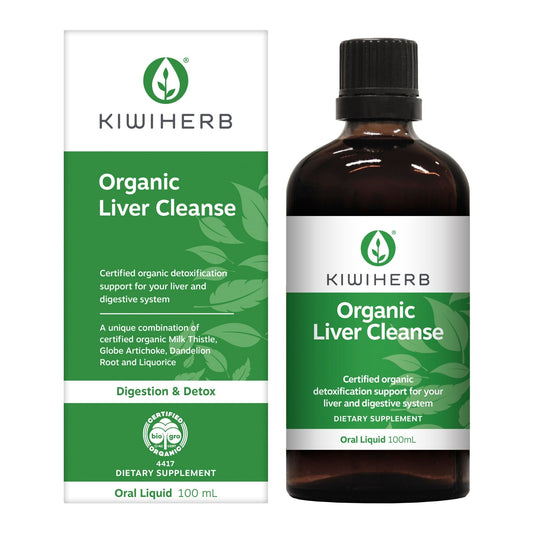
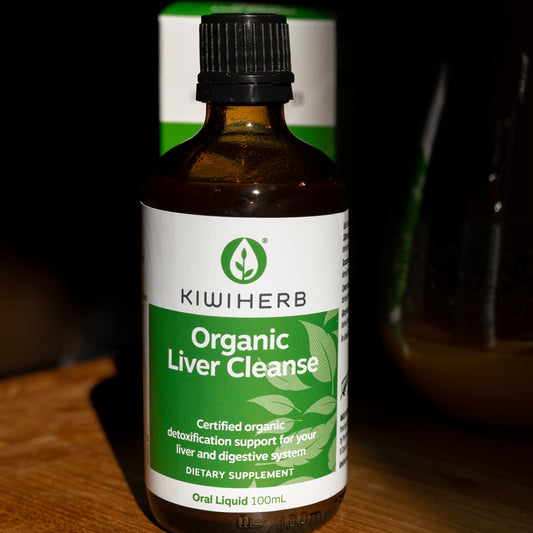
Discover the Kiwiherb products with Globe Artichoke
-
Organic Liver Cleanse
5.0 / 5.0
(10) 10 total reviews
Regular price $66.50 NZDRegular priceUnit price / per