- Home
- Herb Profiles
- Milk Thistle
Milk Thistle
Native to the Mediterranean region, Milk Thistle is now widely cultivated throughout the world. For centuries, it has been valued in traditional herbal medicine for supporting liver and gallbladder health, and modern scientific research has confirmed these uses. Today, Milk Thistle is considered one of the premium herbs for liver care and is one of the most effective natural ‘detox’ remedies available.
Milk Thistle seeds contain the active compounds responsible for protecting the liver against toxins. This effect is attributed to its potent antioxidant compounds, which help neutralise free radicals and reduce oxidative stress in liver tissue. These constituents also stimulate regeneration of liver cells following injury, supporting recovery and long-term liver function.
Many clinical trials have reported positive outcomes from Milk Thistle extracts in preventing liver damage caused by a range of toxins, including alcohol and certain medications. As a result, Milk Thistle may be beneficial in conditions such as fatty liver disease, chemical exposure, hepatitis and cirrhosis. Notably, it is used in several countries as treatment for poisoning from death cap mushroom.
While Milk Thistle is useful in the management of liver disease, it is equally valuable as a preventative herb, helping to maintain healthy liver function.

Botanical name:Silybum marianum
Common name:St Mary’s Thistle, Variegated Thistle
Part used:Seed
Frequently asked questions
What is Milk Thistle good for?
Milk Thistle is primarily known for supporting liver health, yet its benefits span multiple body systems. Traditional and current uses include:
Liver support
Milk Thistle has been traditionally used to protect the liver from injury, support liver regeneration and improve liver function. High-quality clinical research has focused on silymarin, an active constituent in Milk Thistle, responsible for its liver-loving properties. Silymarin is a potent antioxidant that protects liver cells from damage and supports their healing. Standardised extracts of silymarin are clinically indicated for non-alcoholic and alcoholic fatty liver disease, cirrhosis, exposure to chemical pollutants and even the treatment of death cap mushroom poisoning.
Antioxidant support
Milk Thistle has strong antioxidant properties, helping to neutralise free radicals that can damage cells. Its antioxidant capacity is behind its protective benefits for the liver, skin and lipid balance.
Digestive health
Milk Thistle supports digestive health by stimulating and regulating bile production through its active compound, silymarin. Healthy bile flow is crucial for emulsifying dietary fats, aiding their digestion and absorption, and preventing bile stagnation that can contribute to bloating or sluggish digestion. By supporting liver cells and promoting efficient bile secretion into the intestines, Milk Thistle helps improve fat metabolism, nutrient uptake, and overall digestive efficiency.
Skin health
Milk Thistle can support skin conditions such as acne or eczema due to its anti-inflammatory, antioxidant and detox-supporting effects. When liver detoxification is impaired, toxins can build up in the bloodstream and are expelled through the skin. Milk Thistle allows the liver to detoxify effectively and eliminate toxins through sweat, urine and stool instead. Silymarin helps protect skin cells from oxidative stress caused by UV exposure, environmental pollutants and toxins.
Blood sugar balance
Milk Thistle may support blood sugar balance by improving insulin sensitivity and reducing oxidative stress, largely due to its active compound silymarin. Research suggests silymarin can help the body use insulin more effectively and may lower fasting blood glucose levels, especially in people with insulin resistance or type 2 diabetes. Its anti-inflammatory and antioxidant effects also help protect pancreatic cells and reduce metabolic stress, which can contribute to steadier blood sugar control over time.
Cholesterol support
Milk Thistle increases bile production. Cholesterol is used to create bile acids. When bile production increases, more cholesterol is pulled from the bloodstream to replenish bile stores. Milk Thistle’s antioxidant and anti-inflammatory activity also help reduce lipid imbalance by reducing oxidative stress.
Does Milk Thistle detox the liver?
The idea of ‘detoxification’ is often misunderstood. The liver naturally detoxifies the body, working continuously to break down and eliminate toxins. Milk Thistle does not detox the liver on its own, rather it supports and enhances the liver’s natural detoxification process.
The primary way Milk Thistle supports detoxification is by:
- Activating essential enzymes for phases I and II of detoxification
- Protecting liver cells from damage
- Supporting regeneration of new liver tissue
- Promoting bile flow (important for excreting toxins)
- Reducing inflammation and oxidative stress in liver tissue
As the liver is central to detoxification, filtering blood, metabolising substances and eliminating waste, supporting it with Milk Thistle can improve overall detox pathways.
How long does it take for Milk Thistle to help the liver?
The answer depends on your individual health, how well your liver is functioning and consistency of use. In general:
Short-term effects: Some people notice improvements in digestion, energy and skin appearance in 2–4 weeks.
Liver function support: Benefits to liver enzymes and function may take 8–12 weeks or longer.
Chronic conditions: If someone is using Milk Thistle to help with ongoing liver challenges (e.g., fatty liver), it may take several months of consistent use to see measurable changes.
Herbal medicines like Milk Thistle often work gently and cumulatively, meaning consistent use over time is key.
Can Milk Thistle cure fatty liver?
Milk Thistle cannot be considered a cure for fatty liver disease, although it can support liver health as part of a broader lifestyle approach.
Non-alcoholic fatty liver disease (NAFLD) is largely driven by:
- Poor diet high in refined sugar and saturated fats
- Insulin resistance
- Obesity
- Sedentary lifestyle
- Oxidative stress and systemic inflammation
Scientific evidence affirms Milk Thistles ability to reduce liver inflammation and support liver enzyme levels in individuals with fatty liver, but it is not a standalone cure.
The following changes can improve or even reverse early stages of fatty liver:
- Weight management
- Improved nutrition
- Regular physical activity
- Smoking cessation and reduced alcohol intake
Milk Thistle can be a helpful part of a liver-supporting protocol, but it should be combined with dietary and lifestyle changes and guidance from a health professional for the best outcome.
What are the first signs your liver is struggling?
The liver doesn’t always cause obvious symptoms until strain is significant. However, early signs that your liver may be struggling include:
- Persistent or low energy
- Digestive issues such as bloating, constipation and excessive gas
- Skin problems like eczema or acne
- Brain fog or difficulty concentrating
- Hormone alterations such as PMS symptoms
- Chemical sensitivities and allergies
Which part of Milk Thistle has the highest concentration of constituents?
Milk Thistle seeds contain the highest concentration of active constituents, particularly silymarin, the primary bioactive compound.
This is why most Milk Thistle extracts are made from the seeds rather than the leaves or flowers.
The seeds contain flavonoids and other phytonutrients responsible for the herb's liver-supporting effects.
What are the active constituents in Milk Thistle?
Flavolignans (silybin, silydianin and silychristin, known collectively as silymarin or the ‘silymarin complex’)
- Silymarin is the most studied active constituent in Milk Thistle and is responsible for most of its benefits.
- Silymarin is a powerful antioxidant that reacts with numerous free radicals to form more stable and less reactive compounds, thus increasing the stability of liver cell membranes.
- Silymarin acts as a toxin blockade by inhibiting binding of toxins to liver cell membrane receptors.
- Silymarin has shown hypoglycaemic and lipid-lowering effects, reducing lipid peroxidation and exerting a beneficial effect on cardiovascular health.
Flavonoids (quercetin and taxifolin)
- Flavonoids produce powerful antioxidant effects that help reduce oxidative stress and protect liver cells from damage.
- Flavonoids help regenerate liver cells and healthy liver tissue.
Fatty acids (polyunsaturated fatty acids)
- Polyunsaturated acids (PUFAs) support cardiovascular health by reducing LDL cholesterol and preventing atherosclerosis.
How much Milk Thistle is safe to consume?
Typical adult dosages:
- Infusion using dried seed: 4-9 g/day
- Fluid extract 1:1 between 4-8.5 mL/day
- Capsules: These are usually standardised to contain 70-80% silymarin. A common range is 150-450 mg of silymarin per day, often divided into 2-3 doses.
Always follow dosage recommendations and consult with a Naturopath and Medical Herbalist if using other medications or herbal products.
When is the best time to take Milk Thistle? Morning or night?
Milk Thistle can be taken at any time of the day. There is no evidence to suggest Milk Thistle is more effective in the morning versus at night, consistency is more important than timing.
General tips
- Take with meals, especially with food that contains some fat. This helps with absorption and is an easy way to remember to take your herbs.
- Spread doses evenly (e.g. am and pm) if taking multiple times per day.
Does Milk Thistle have dairy in it?
No, Milk Thistle is a herbal plant and does not contain dairy. The name ‘Milk’ Thistle comes from the milky white veins on its leaves, not from dairy content.
Is Milk Thistle safe during pregnancy?
There is limited safety data on the use of Milk Thistle during pregnancy, although there is no evidence of increased foetal damage in animal studies.
Consumption of Milk Thistle during pregnancy and breastfeeding should be guided by a Naturopath or Medical Herbalist, for safe dosing and monitoring.
Who should avoid Milk Thistle?
Milk Thistle is generally well-tolerated, but certain individuals should be cautious:
Known allergy to Asteraceae (daisy) family
Milk Thistle may interact with medications metabolised by the liver, either increasing or decreasing their levels. Consult with a Naturopath or Medical Herbalist if you take prescription drugs.
Iron-deficient anaemia. Milk Thistle has the potential to reduce iron absorption, take at least an hour away from iron supplements.
Where is Milk Thistle native to?
Milk Thistle is native to the Mediterranean region, through to Central Asia, India and Ethiopia.
From there, it has naturalised throughout:
- Europe
- North America
- South America
- Australia
- New Zealand
It grows easily in temperate climates, often in disturbed soils, roadsides and fields.
How do you grow Milk Thistle in New Zealand?
Milk thistle can be grown relatively easily in New Zealand’s temperate climate.
Growing tips
- Choose a sunny, well-drained spot.
- Sow seeds in early spring after frost risk has passed.
- Space plants about 30–45 cm apart.
- Keep weeds down and water moderately. Once established, its drought tolerant.
- Take care: It’s considered a weed in some areas because it can self-seed prolifically.
Because Milk Thistle is robust and spreads easily, check local guidelines before planting to avoid invasive spread.
When is the best time to grow Milk Thistle in New Zealand?
In New Zealand’s climate, the best time to sow milk thistle seeds is spring (September to November). This ensures warm soil for germination. If you miss spring sowing, you can also plant in early autumn in some regions.
Milk thistle prefers temperatures between 15–25°C for optimal germination.
When is the best time to harvest Milk Thistle in New Zealand?
Milk Thistle is typically ready to harvest when the seeds fully mature, which is usually later summer to early autumn (February to April).
When it is time to harvest, look for:
- Brown, dry seed heads
- Seeds that fall out easily when shaken
To harvest seeds:
- Cut the seed heads with gloves (the thorns are sharp).
- Dry them in a cool, ventilated place.
- Remove seeds by rubbing or shaking when fully dry.
- Store in a sealed container away from light and moisture.
References
Gillessen, A., Angelico, F., Chen, J., Lu, L., Lucena, M. I., Fu, Q., Xie, Q., Andrade, R. J., Xie, W., Xu, X., Yu, Y., Mao, Y., & Nan, Y. (2022). Silymarin for treating toxic liver disease: International consensus recommendations. Gastro Hep Advances, 1(5), 882–893. https://doi.org/10.1016/j.gastha.2022.05.006
Gillessen, A., & Schmidt, H. H.-J. (2020). Silymarin as supportive treatment in liver diseases: A narrative review. Advances in Therapy, 37(4), 1279–1301. https://doi.org/10.1007/s12325-020-01251-y
Kudláčková, B., Misák, P., & Pluháčková, H. (2025). Silymarin and fatty acid profiles of milk thistle (Silybum marianum L.) genotypes. Plant Foods for Human Nutrition, 80(4). https://doi.org/10.1007/s11130-025-01400-0
Mirhashemi, S. H., Hakakzadeh, A., Yeganeh, F. E., Oshidari, B., & Rezaee, S. P. (2022). Effect of 8 weeks milk thistle powder (silymarin extract) supplementation on fatty liver disease in patients candidates for bariatric surgery. Metabolism Open, 14, 100190. https://doi.org/10.1016/j.metop.2022.100190
Zeb, A., & Jamil, M. (2024). Milk thistle protects against non-alcoholic fatty liver disease induced by dietary thermally oxidized tallow. Heliyon, 10(10), e31445. https://doi.org/10.1016/j.heliyon.2024.e31445
Discover the Kiwiherb products with Milk Thistle
-
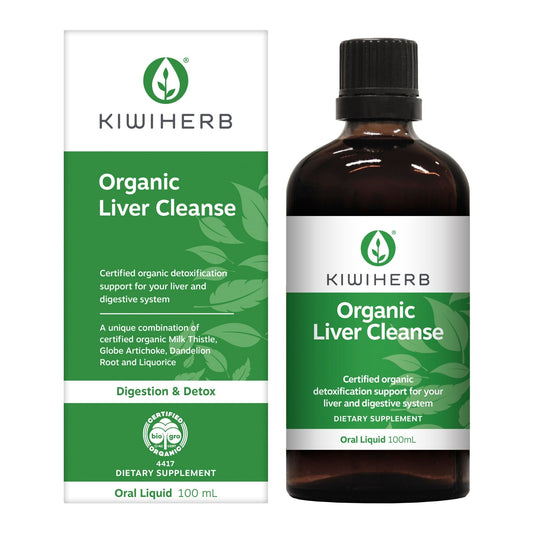
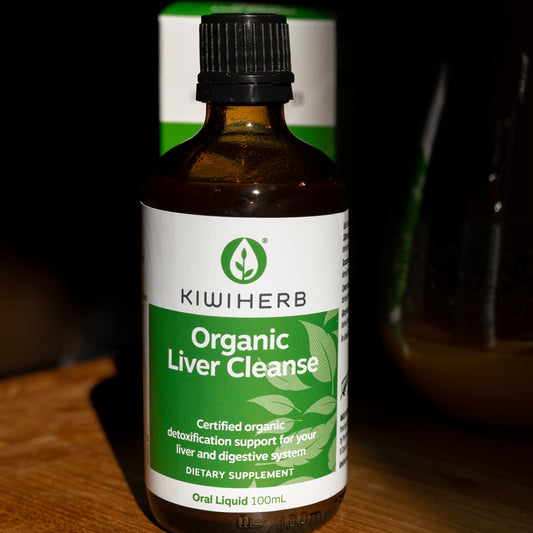
Organic Liver Cleanse
5.0 / 5.0
(8) 8 total reviews
Regular price $66.50 NZDRegular priceUnit price / per