Ribwort
Botanical name: Plantago Lanceolata
Common name: Ribwort, Plantain, Narrow-leaved plantain
Part used: Leaf
The leaves contain a slippery substance called mucilage which has soothing properties, as well as tannins, which are astringent. When used internally, this combination of astringency and soothing also makes ribwort ideal for healing irritated linings of the digestive and respiratory tracts. It is also useful in conditions where there is excess mucous such as runny noses and chest complaints, we specifically use it to support the symptoms of hayfever.
Found in
-
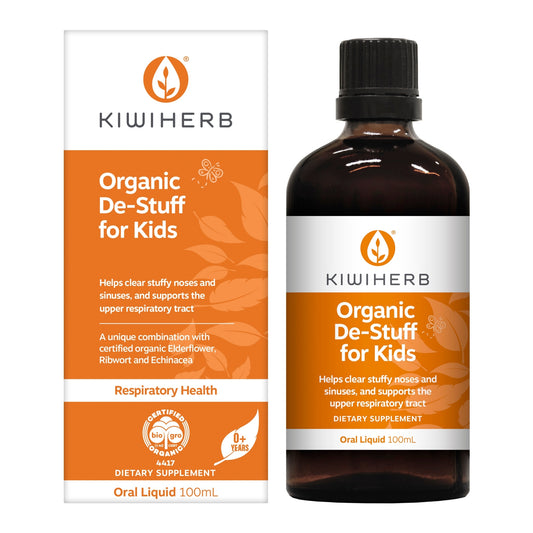
Organic De-Stuff for Kids
Regular price From $29.62 NZDRegular priceUnit price / per$39.50 NZDSale price From $29.62 NZDSale -
Organic De-Stuff
Regular price From $41.15 NZDRegular priceUnit price / perSale price From $41.15 NZD
Frequently asked questions
What is ribwort good for?
Ribwort (Plantago lanceolata), also known as ribwort plantain or narrow-leaf plantain, is a common herb traditionally used to support the respiratory system and soothe irritated tissues. It’s best known for easing dry, irritating coughs, catarrh and hay fever, and is also used on the skin for insect bites, stings and minor wounds. Ribwort gets its name from the strong, parallel “ribs” that run along its long, narrow leaves. Despite the name, it’s not related to the banana-like plantain fruit.
Is ribwort good for coughs?
Yes, ribwort is a traditional favourite for dry, tickly and irritating coughs. Its leaves are rich in mucilage, a soothing, gel-like substance that coats and calms the throat and airways, along with compounds such as aucubin that are thought to help ease inflammation. Ribwort is especially suited to children’s cough formulas due to its gentle nature, and is often combined with herbs like thyme, marshmallow and mullein in cough syrups.
Can ribwort help with hay fever and catarrh?
Ribwort is traditionally used to help reduce catarrh, the excess mucus that causes a blocked or runny nose, post-nasal drip and sinus congestion. It’s thought to help tone and soothe the mucous membranes of the nose and upper airways, making it a popular herb during hay fever season. Ribwort is often paired with eyebright and elderflower in formulas designed to support clear breathing and ease seasonal allergy symptoms.
Is ribwort good for bites and stings?
Yes, ribwort has a long tradition as a “first aid” herb for the skin. Its leaves contain mucilage, tannins and allantoin, which are thought to help soothe, cool and support the healing of minor skin irritations. Traditionally, a fresh leaf was crushed or chewed and placed directly on insect bites, bee stings and nettle stings for quick relief. Today, ribwort is also found in balms and creams for minor skin complaints.
Are there any side effects of ribwort?
Ribwort is generally gentle and well tolerated when taken as directed. Rarely, some people may experience allergic reactions, particularly those with hay fever who are sensitive to plantain pollen, which is a common airborne allergen in New Zealand. Check with your healthcare professional before use if you’re pregnant, breastfeeding or taking prescription medication, and check the label’s age guidance before giving it to children. See your doctor if a cough lasts more than a couple of weeks, or if you have a fever, chest pain or difficulty breathing.